
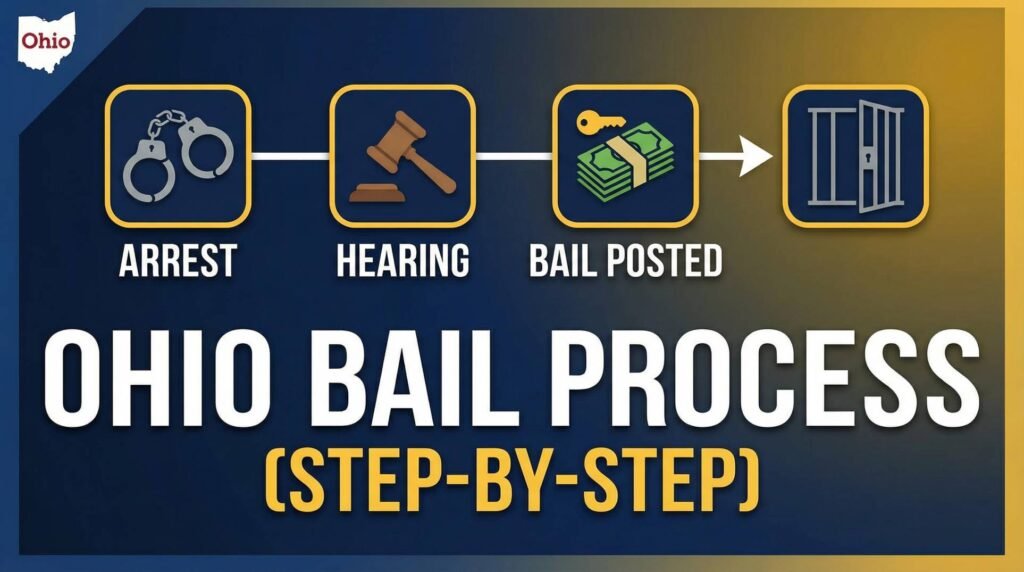
Being arrested and held in an Ohio jail can feel overwhelming, but understanding the bail process helps you act quickly to secure release. This guide breaks down each step clearly, based on Ohio law, so you know what to expect and how to navigate it efficiently.
What Is Bail and Why Does It Matter?
Bail allows a defendant to leave jail while awaiting trial, acting as a guarantee they’ll return for court dates. In Ohio, judges set bail considering factors like public safety, criminal history, flight risk, and offense severity under Ohio Revised Code Section 2937.011.
The goal is the least restrictive conditions that ensure court appearance and community safety. Without bail, defendants stay detained, which can disrupt jobs, families, and preparations for defense.
Ohio reformed its bail laws in 2023 via State Issue 1, embedding these factors into statute for fairer decisions.
Step 1: Arrest and Booking
After arrest, police transport the individual to a local jail like those in Allen or Putnam County for booking. This process, lasting 1-4 hours, includes fingerprints, photos, personal details, and inventory of belongings.
Booking confirms identity and logs charges. In Ohio, minor misdemeanors might allow immediate release on a citation, but most cases proceed to the next steps.
Family or friends can start gathering info: full name, date of birth, booking number, charges, and jail location—these are essential for later steps.
Step 2: Initial Court Appearance and Bail Setting
Within 24-48 hours, a judge or magistrate holds an arraignment or bail hearing, informing the defendant of charges and setting bail.
Judges weigh the crime’s nature, defendant’s ties to Ohio (job, family), prior record, and risks. Misdemeanors often use schedules: e.g., in Franklin Municipal Court, $5,000-$15,000 by degree; Allen County varies similarly.
Felonies get individualized amounts, potentially higher due to severity. Release on recognizance (no money) is possible for low-risk cases.
Bail Types in Ohio Jails
Ohio offers several options to meet bail conditions.
| Bail Type | Description | Pros | Cons | Typical Use |
|---|---|---|---|---|
| Cash Bond | Full payment to court clerk; refunded minus fees if conditions met. | Full control; refundable. | Requires full amount upfront. | Low-moderate bails. |
| Surety Bond (Bail Bond) | Licensed agent posts full bail for 10% non-refundable premium (state max). | Affordable; quick. | Premium not returned; possible collateral. | High bails; common choice. |
| Property Bond | Pledge real estate or assets worth bail amount. | No cash needed. | Lengthy approval; risk of loss. | Large amounts. |
| Personal Recognizance | Promise to appear; no payment. | Free. | Rare for serious charges. | Minor offenses, low risk. |
Surety bonds dominate as few pay full cash.
Step 3: Posting Bail
Once set, post bail at the jail or court clerk. For cash/surety, provide payment; bondsmen handle paperwork.
Bondsmen charge exactly 10% premium (e.g., $1,000 for $10,000 bail), plus minor fees; no negotiation per state law. Collateral like vehicles or property may be required for high-risk or large bonds.
In Lima (Allen County), bondsmen are minutes from jail; process starts via phone 24/7.
Step 4: Release from Jail
After posting, processing takes 4-12 hours, sometimes 24-48 for verification. Defendant gets release papers with court date and conditions.
Expect paperwork review; personal items returned minus prohibited items.
Conditions of Release and Compliance
Judges impose rules like no contact with victims, travel limits, drug tests, or electronic monitoring. Violating them risks revocation.
Attend all hearings; missing one triggers warrant, forfeiture (cash kept, bond company pursues payment).
What If Bail Is Denied?
Rarely, judges deny bail for capital offenses or proven dangers via hearing with evidence. Appeals possible; consult attorney.
Pretrial services might offer supervised release instead.
Common Bail Amounts in Ohio
Amounts vary by jurisdiction and charge.
-
Misdemeanors: $500-$15,000 (e.g., Monroe County: $500-$1,250; Warren: $5,000-$15,000).
-
Felonies: $10,000+; OVI felonies higher; murders potentially millions or denied.
-
Examples: Domestic violence $2,500-$10,000; theft $1,000-$5,000; DUI $1,000-$20,000.
Schedules guide minor cases; judges adjust.
Frequent Challenges and Solutions
Challenge: Can’t afford 10%? Solution: Bondsmen offer payment plans (e.g., 4-5% down), but premium totals 10%.
Challenge: No collateral? Solution: Low-risk cases often waive it; shop reputable agents.
Challenge: Multiple charges/jurisdictions? Solution: Post sequentially; bondsmen coordinate.
Challenge: Out-of-town? Solution: Many handle remotely with ID verification.
What Happens After Release?
Prepare for trial: hire attorney, follow conditions, attend pretrial conferences. Bail refunded post-case if compliant (cash only).
Bondsmen monitor compliance; communicate issues early.
Bail Revocation Risks
Prosecutors or bondsmen motion revocation for violations (new crimes, no-shows). Hearing follows; if granted, re-arrest, forfeiture.
Prevent by strict adherence.
Myths About Ohio Bail
-
Myth: Bonds negotiable below 10%. Fact: Illegal; state-fixed.
-
Myth: Bail guarantees acquittal. Fact: Innocent until proven; just pretrial release.
-
Myth: Always needs collateral. Fact: Depends on risk.
Preparing for the Process
Have cash/ID ready; know inmate details. Licensed bondsmen ensure smooth handling—verify via Ohio Dept. of Insurance.
Act fast: 24/7 availability standard.
For reliable help in Ohio jails, especially Lima/Phoenix areas, contact Allstate Bail Bonds at 419-765-0861. Their experienced team posts bonds quickly, offers payment options, and guides you every step for stress-free release.
