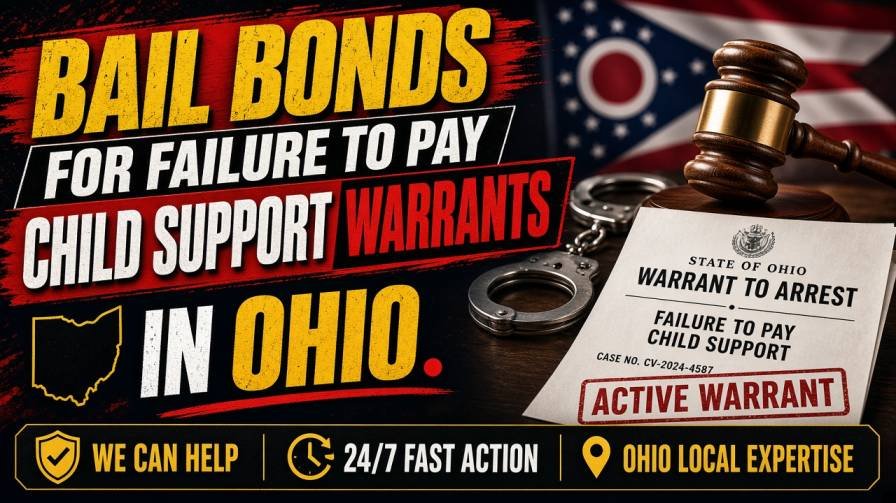
Bail Bonds for Failure to Pay Child Support Warrants in Ohio
Receiving a notice that there may be a warrant related to unpaid child support can be frightening. If you or a loved one has been arrested because of a child support matter, one of the first questions is often: Can a bail bond be used to help secure release from custody?
The answer depends on the specific warrant, court order, county, and type of proceeding involved. In Ohio, failure to comply with a child support order can lead to a contempt proceeding, and a court may take additional enforcement action when a person does not appear as required. Ohio law also provides for bail in certain contempt proceedings when the court determines that a bond is appropriate.
This guide explains what an Ohio child support warrant may mean, what to do after an arrest, how bail bonds may fit into the process, and what information families should have ready when contacting a bail bond agency.
What Is a Child Support Warrant in Ohio?
A child support warrant may arise when a person has failed to comply with a court order or fails to appear for a required court proceeding related to child support.
Ohio law allows a party with a legal claim to support to initiate a contempt action for failure to pay support. In qualifying cases, the court can require the person accused of noncompliance to appear. The summons may warn that failing to appear can result in an order for arrest.
It is important to understand that an arrest connected with unpaid child support does not automatically mean the person has been convicted of a crime. The underlying circumstances and legal classification of the proceeding matter.
A person facing a warrant should review the paperwork and speak with an Ohio attorney about the underlying child support case.
Why Can Someone Be Arrested for Unpaid Child Support?
Child support is generally established through a court or administrative order. When a person does not follow that order, enforcement mechanisms may become available.
Ohio law recognizes contempt proceedings for failure to comply with support obligations. The court can consider the alleged failure to comply and determine what action is appropriate under the circumstances.
A child support matter can involve several different enforcement tools. Depending on the circumstances, these may include income withholding, liens, license-related consequences, financial account enforcement, or court proceedings.
The exact action taken depends on the individual’s case and the applicable court and agency procedures.
What Happens If There Is a Warrant?
If a person has an active warrant, law enforcement may take the person into custody.
After an arrest, the individual may go through the local jail’s booking process. The next steps can depend on the court that issued the warrant and the nature of the proceeding.
Some people assume that paying the overdue child support immediately will automatically cancel an arrest warrant. That is not necessarily the case.
Do not assume that paying money directly will cause an active warrant to disappear. The court or appropriate authority generally controls the status of the warrant and the conditions for release.
If someone has already been arrested, the safest approach is to determine:
- Which court issued the warrant
- What type of warrant was issued
- Whether a bond has been set
- The amount and conditions of the bond
- Whether there are additional holds
- When the person must appear in court
- Whether an attorney should be contacted
Can You Get a Bail Bond for a Child Support Warrant in Ohio?
A bail bond may be available in some cases, but not every child support warrant is handled in exactly the same way.
Ohio Revised Code Section 2705.04 addresses the right to bail in certain contempt proceedings. When applicable, the court may fix the amount of a bond and require a surety. Once the required bond is executed, the person may be released from custody subject to the court’s requirements.
That means families should not rely on a general assumption that every child support warrant has the same bond amount or release procedure.
The jail, court, or bail bond agent can help determine what information is needed to begin the process, while an attorney can provide legal advice about the underlying child support case.
What Is the Difference Between Bail and a Bail Bond?
Bail and a bail bond are related but different.
Bail is an amount or form of security established by the court or other authorized process to secure a person’s appearance and compliance with release conditions.
A surety bail bond involves a licensed bail bond agency providing a bond on behalf of the defendant, subject to the agency’s requirements and the court’s conditions.
For example, if a court sets a bond at a particular amount, a family may contact a licensed bail bond agent to determine whether the agency can write the bond and what premium, payment arrangements, collateral, identification, and other requirements apply.
The actual cost and terms should always be explained before signing the agreement.
What Should You Do After Someone Is Arrested?
An arrest can create significant stress, particularly when family members are unsure what to do next. Taking a systematic approach can help.
1. Confirm Where the Person Is Being Held
Find out which jail or detention facility has custody of the person.
Ask for the person’s full legal name and, if available, date of birth. These details can help a bail bond agency locate the correct defendant and avoid confusion with someone who has a similar name.
2. Find Out Why the Person Was Arrested
Ask whether the arrest relates specifically to:
- Failure to pay child support
- Failure to appear
- Contempt of court
- Another warrant
- Multiple warrants
- An additional criminal charge or hold
A person can have more than one legal issue at the same time, so understanding the reason for custody is important.
3. Determine Whether a Bond Has Been Set
Ask the jail or court whether a bond has been established.
If a bond has been set, obtain the amount and any special conditions you can confirm.
If no bond has been set, ask what hearing or court action is required before release can be considered.
4. Contact a Bail Bond Agent
If a bond is available and a surety bond is permitted, contact a licensed bail bond agency.
Be prepared to provide information such as the defendant’s full name, date of birth, jail location, booking information, and bond amount.
5. Contact an Attorney About the Child Support Case
A bail bond agent helps with the bond and release process. A bail bond agent is not a substitute for an attorney.
If the underlying issue involves unpaid support, arrears, contempt, disputed payments, inability to pay, modification of support, or another legal issue, the defendant should consider obtaining appropriate legal advice.
Does Posting a Bail Bond Erase Child Support Arrears?
No.
A bail bond addresses release from custody. It does not automatically eliminate past-due child support or terminate an existing support obligation.
Ohio law specifically provides that a penalty for contempt does not eliminate the obligation to pay past, present, or future support.
This distinction is extremely important.
Someone can potentially obtain release from custody while still needing to address the underlying child support matter in court.
The defendant may need to attend future hearings, comply with payment requirements, respond to enforcement actions, or seek a modification through the appropriate legal process.
What Happens at a Child Support Contempt Hearing?
A contempt proceeding gives the court an opportunity to consider the alleged failure to comply with the relevant order.
Ohio law provides for a hearing in contempt proceedings, during which the court investigates the charge and considers the answer or testimony presented. If contempt is established, the court may impose penalties authorized by law.
For certain contempt proceedings involving failure to pay support, Ohio law also provides specific notice and procedural protections, including information about the right to counsel and procedures for obtaining appointed counsel if the person is indigent.
Because the consequences can vary based on the circumstances and history of the case, anyone facing a child support contempt matter should take the court date seriously.
What Information Should You Have When Calling a Bail Bond Agency?
Having accurate information can make the initial conversation more efficient.
Try to have:
- Defendant’s full legal name
- Date of birth
- County where the person was arrested
- Jail or detention facility
- Booking number, if available
- Bond amount, if already established
- Court name
- Case number, if available
- Information about any additional charges or holds
- Contact information for the person responsible for arranging the bond
If you do not have every detail, do not panic. A bail bond agency can tell you what information is needed to determine the next step.
Can a Family Member Arrange the Bail Bond?
In many situations, a friend or family member may contact a bail bond agency on behalf of someone in custody.
However, the person arranging the bond should understand the financial and contractual responsibilities before signing any agreement.
Ask questions about:
- Premium and payment requirements
- Available payment arrangements
- Collateral requirements, if applicable
- Responsibilities of the indemnitor or co-signer
- Court appearance requirements
- What happens if the defendant fails to appear
- Conditions for releasing collateral
Do not sign a contract you do not understand. Ask the bail bond agent to explain the agreement and any financial obligations.
What If the Person Cannot Afford the Child Support?
A common misconception is that being unable to pay automatically prevents any court action.
Child support cases can involve complicated financial circumstances, including changes in employment, income, household circumstances, or other factors.
However, a person should not simply stop making payments or ignore court notices.
If circumstances have changed, the person should obtain legal advice and use the appropriate process to request a modification or address the issue. Ignoring notices can create additional legal problems.
Ohio law also requires parties to child support orders to keep certain contact information updated with the child support enforcement agency. Failure to provide required information can result in additional consequences.
Do Not Ignore a Child Support Warrant
Ignoring an outstanding warrant generally does not make the problem disappear.
If you discover that you or a family member may have an active warrant, consider taking these steps:
- Confirm the warrant and issuing court.
- Determine whether the person is currently wanted or already in custody.
- Find out whether a bond has been set.
- Contact an attorney regarding the underlying child support matter.
- If a bond is available, contact a licensed bail bond agency.
- Follow every court instruction and appearance requirement.
- Continue addressing the underlying support obligation.
Ohio law provides that failure to appear in certain contempt matters can lead to an order for arrest.
Frequently Asked Questions
Can unpaid child support lead to jail in Ohio?
A person found in contempt may face penalties authorized by Ohio law, which can include incarceration in qualifying circumstances. The specific outcome depends on the proceeding and the court’s findings.
Can I pay child support to get the warrant dismissed?
Not necessarily. Payment of arrears and the status of an arrest warrant are separate issues. The appropriate court or authority determines what happens to an active warrant.
Can a bail bondsman help with a child support warrant?
A bail bond agency may be able to assist when the court has set a bond that can be posted through a surety bond. Availability depends on the specific warrant, court, bond conditions, and applicable requirements.
Does a bail bond eliminate child support debt?
No. A bail bond is intended to address release from custody. It does not erase child support arrears or change an existing support order.
Should I talk to a lawyer?
If you are dealing with a child support contempt proceeding, disputed arrears, an inability-to-pay issue, modification, or other legal question, speaking with an Ohio attorney is advisable. A bail bond agent can assist with the bond process but cannot provide legal representation for the underlying case.
Need Help With a Child Support Warrant in Ohio?
If you or someone you care about has been arrested on a child support-related warrant and a bond has been set, getting clear information quickly can make an overwhelming situation easier to manage.
Allstate Bail Bonds – Marion County Office
Allstate Bail Bonds provides bail bond assistance across Ohio and lists service coverage for all 88 Ohio counties. The company states that its agents provide bail bond guidance and assistance 24 hours a day, 365 days a year.
Call Allstate Bail Bonds: 419-765-0861
When you call, have the defendant’s name, location, booking information, and bond information available if possible. Allstate Bail Bonds can help explain the bail bond process and the information needed to determine the next step. The company lists its main office in Clyde, Ohio, and its Ohio service locations include communities such as Fremont, Findlay, Lima, Kenton, Marion, Sandusky, Tiffin, Wauseon, and others.
Important: A bail bond does not resolve the underlying child support case. If the arrest involves unpaid support or contempt of court, the defendant should also address the underlying matter with the appropriate court and consider obtaining qualified legal advice.
