
Facing an arrest on a warrant in Ohio can feel overwhelming, but understanding your bail options helps you act quickly to regain your freedom. This guide breaks down the process step by step, covering common scenarios and practical steps to resolve the situation.
What Is an Arrest Warrant in Ohio?
An arrest warrant is a court order directing law enforcement to arrest someone, often issued for failing to appear in court, unpaid fines, or new charges. In Ohio, judges issue these under Ohio Revised Code Chapter 2937, which outlines procedures for warrants and arrests. Warrants remain active until resolved, and police can arrest you anytime, anywhere in the state.
Bench warrants, a common type, stem from missing a court date or violating probation terms. Unlike arrest warrants for crimes, bench warrants focus on compliance issues. If pulled over or encountered by police, they check databases like Ohio’s Law Enforcement Automated Data System (LEADS) and take you into custody immediately.
Ignoring a warrant worsens matters—additional charges for failure to appear can pile on, increasing bail amounts. Acting promptly shows the court cooperation, which influences bail decisions.
Arrest Process After a Warrant Is Found
Once arrested on a warrant, you’re booked at the local jail, where fingerprints, photos, and personal details are recorded. Ohio Rules of Criminal Procedure Rule 4(E) govern this: if the warrant specifies bail, you can post it right away at the jail. Otherwise, you’re held until a hearing.
Timing matters. Arrests in the issuing county or adjacent ones allow quicker processing. You’re brought before the issuing court “without unnecessary delay,” often within 48 hours, excluding weekends. Out-of-county arrests may involve transfer, delaying release.
During booking, belongings are inventoried, and you get a chance to make calls. Expect processing to take 4-12 hours, depending on jail volume. Medical screening occurs to ensure safety.
Types of Bail Available in Ohio
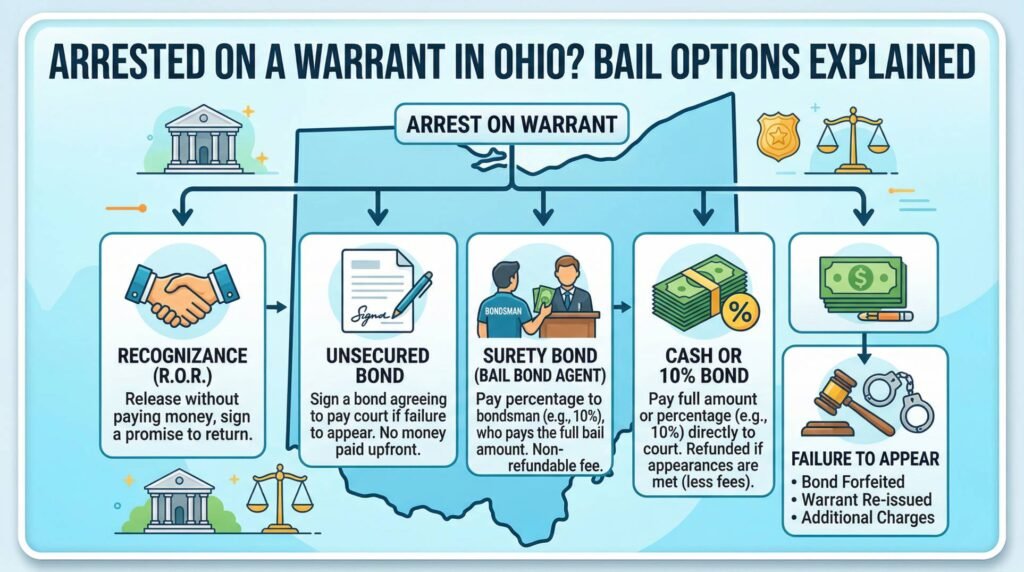
Ohio courts use several bail types to secure appearance, per Ohio Revised Code and Crim. R. 46. Cash bail requires full payment, refunded minus fees if you appear. Surety bonds, via bondsmen, cost 10% of the amount (non-refundable premium) backed by collateral.
Unsecured bonds (personal recognizance) release you on a signed promise to appear—no money upfront, common for minor cases. Property bonds use real estate as collateral, rare due to appraisals. For warrant-specific bonds, called “warrant bonds,” you post after arrest to lift the hold.
Judges consider flight risk, criminal history, and ties to Ohio when setting bail. High-profile cases might require 10-15% down with a bondsman.
| Bail Type | Description | Pros | Cons |
|---|---|---|---|
| Cash Bail | Full amount paid in cash/check | Simple; full refund on appearance | Ties up large sums |
| Surety Bond | 10% premium to bondsman | Affordable; quick approval | Premium non-refundable; collateral possible |
| Personal Recognizance | Promise to appear | No cost upfront | Not for serious charges |
| Property Bond | Real estate as security | No cash needed | Lengthy approval; risk of loss |
How Bail Works for Warrants Specifically
Warrant bail follows standard rules but prioritizes quick resolution. If the warrant notes bail, post it at arrest—cash, bond, or as specified. Silent warrants let the arresting agency consult the issuing court.
For bench warrants from missed appearances, bail equals the original bond or a set amount. Failure-to-appear adds penalties, hiking costs. Turning yourself in before arrest often lowers effective bail, as courts view it favorably.
Bondsmen handle warrant bonds seamlessly: they verify the warrant, post the bond remotely, and coordinate pickup. This avoids surprise arrests—call ahead to self-surrender with a bond pre-arranged.
Steps to Post Bail After Warrant Arrest
-
Confirm the Warrant: Use public records or a lawyer to check details—issuing court, amount, charges.
-
Contact a Bondsman: They pull records via LEADS, quote premiums (typically 10%), and accept credit cards or payment plans.
-
Post the Bond: At jail or remotely; bondsmen visit 24/7.
-
Get Released: Processing takes 1-4 hours post-posting.
-
Attend Court: Appear as ordered, or bond forfeits.
Self-surrender tip: Arrive early (pre-7 a.m.) at the courthouse or jail for same-day hearings, arguing for release on recognizance. Coordinate with a bondsman first for backup.
Family can help remotely—provide warrant info, and bondsmen manage the rest. Expect ID, collateral if needed, and co-signer for high bonds.
Factors Affecting Your Bail Amount
Courts weigh Ohio Crim. R. 46 factors: offense severity, prior record, community ties, flight risk. Misdemeanor warrants might set $1,000-$5,000 bail; felonies $10,000+.
Employment, family in Ohio, and clean record lower amounts. Drug charges or violence elevate them. Warrants from multiple courts compound totals—resolve one by one.
Judges can deny bail for capital offenses but rarely for warrants alone. Voluntary surrender reduces perceived risk, often yielding lower bail or OR release.
Turning Yourself In: Pros and Cons
Proactively surrendering beats surprise arrest. Courts favor it, potentially quashing warrants or reducing bail via immediate hearings. Avoids extra charges and shows responsibility.
Downsides: Still face booking, possible overnight hold if after hours. Coordinate with counsel to schedule.
Steps: Lawyer files motion or you appear at issuing court. Bondsman pre-posts for instant release post-hearing.
Common Mistakes to Avoid
-
Ignoring the warrant: Leads to higher bail, job loss, travel bans.
-
Posting without advice: Overpaying or missing conditions.
-
Missing court post-release: Forfeits bond, new warrant.
-
Using unlicensed agents: Scams abound; verify licensing.
Always get warrant specifics first. Lawyers can negotiate pre-surrender.
Legal Rights During Warrant Arrests
You have Miranda rights: remain silent, attorney request. Ohio requires prompt judicial review. No bail? Habeas corpus petition possible after 48 hours.
Discrimination-free treatment applies. Document everything for your attorney.
Costs and Payment Options
Premiums run 8-15% of bail, state-regulated. $10,000 bond = $1,000 fee. Payment plans (as low as 4% down) and major cards accepted. Collateral like vehicles for larger bonds.
No hidden fees from reputable agents. Fees non-refundable, but save full cash bail.
When Bail Might Be Denied
Rare for warrants, but flight risks or violent histories face hold-without-bail. Appeal via preliminary hearing.
Resolving Warrants Long-Term
Post-release, address root issues: pay fines, complete community service. Motion to dismiss if errors exist. Attorney crucial here.
Why Choose Professional Bail Help?
Experienced bondsmen navigate Ohio’s system fast—24/7 availability, local knowledge, flexible terms. They prevent prolonged detention, preserving jobs and family life.
For trusted service in North Ohio, contact Allstate Bail Bonds at 419-765-0861. Serving Sandusky, Erie, Wood Counties and beyond, their licensed agents offer quick releases, payment plans starting at 4% down, and compassionate support around the clock. Call now to get started—freedom awaits.
