
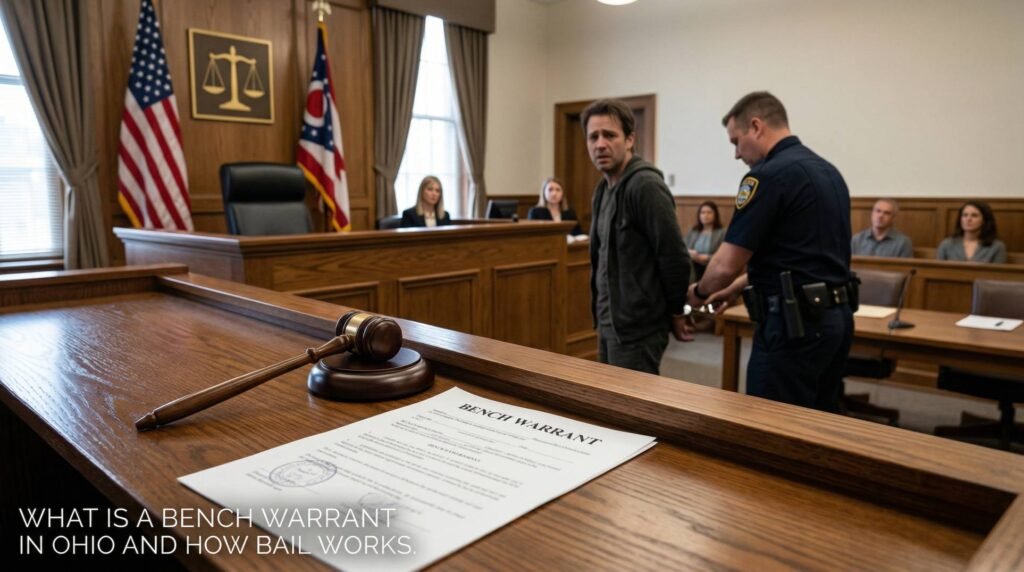
A bench warrant in Ohio is a court-issued order for your arrest, typically triggered by missing a court date or ignoring a court order. Understanding how it works and the bail process can help you address it quickly to avoid escalating problems.
What Is a Bench Warrant?
A bench warrant is different from a regular arrest warrant. Judges issue it directly from the “bench” when someone fails to show up for a scheduled court appearance or violates a court directive, like paying a fine or completing community service. This warrant authorizes police to arrest you anywhere, anytime—even during a routine traffic stop.
In Ohio, these warrants enter a statewide database that law enforcement checks regularly. They often stem from minor issues, such as unpaid traffic tickets or probation violations, rather than new crimes. Unlike arrest warrants based on suspected crimes, bench warrants focus on ensuring court compliance.
Common Reasons for Bench Warrants in Ohio
Missing a court date is the top cause. If you’re on probation or released on bail and skip a hearing, the judge assumes you’re not taking the matter seriously.
Other triggers include:
-
Failing to pay court-ordered fines or restitution.
-
Ignoring summons for jury duty or child support hearings.
-
Violating pretrial release conditions, like not reporting to a probation officer.
These situations build up quietly. A small unpaid ticket can snowball into a warrant if ignored.
How Bench Warrants Are Issued and Enforced
The process starts in court. When you don’t appear, the judge reviews the case and signs the warrant on the spot. It then goes into Ohio’s law enforcement system, making it active across the state.
Police enforce it during any encounter. A taillight out or ID check can lead to discovery and arrest. Once in custody, you’re held until the original case resumes—sometimes without immediate release.
Warrants don’t expire easily. They stay active until resolved, potentially leading to job loss, license suspension, or extradition if you leave Ohio.
Consequences of Ignoring a Bench Warrant
Delaying action worsens everything. Arrest means jail time until your hearing, plus possible higher fines or jail added to your original charge.
Long-term effects include:
-
Criminal record damage, affecting employment and housing.
-
Suspended driver’s license, common for traffic-related warrants.
-
Increased penalties, like turning a misdemeanor into a felony charge.
Many face these during everyday activities, turning a fixable issue into a crisis.
Checking for a Bench Warrant in Ohio
Start by searching public records. Ohio’s court websites, like those for your county (e.g., Wood, Sandusky, or Allen County), list active warrants. Use the case number or your name.
Call the clerk of courts non-emergency line for your jurisdiction. Avoid direct police contact, as it risks immediate arrest. Online tools like Ohio’s Supreme Court portal provide free lookups without alerting authorities.
If unsure, consult a professional before self-surrendering.
Steps to Resolve a Bench Warrant
Act fast but smart. Contact an attorney or bail service first—they can verify the warrant and arrange surrender on your terms.
Typical resolution process:
-
Hire legal help to file a motion to quash the warrant.
-
Schedule a voluntary court appearance to explain the absence (e.g., illness or notice error).
-
Post bail if required, then address the underlying issue.
Courts often lift warrants upon appearance, but preparation prevents surprises. Never turn yourself in without advice.
Bail After a Bench Warrant Arrest
Once arrested on a bench warrant, you’re taken to the local jail. A magistrate or judge sets bail quickly, often at your initial hearing.
Bail aims to ensure you return for future dates. Options include:
-
Cash bail: Full amount paid to the court, refunded minus fees if you comply.
-
Surety bond: A bondsman posts it for a 10% fee (non-refundable).
-
Property bond: Using real estate as collateral (rare).
Judges consider flight risk and offense severity. For minor warrants, bail might be low or waived with a promise to appear.
How Bail Bonds Work in Ohio
Bail bondsmen like surety agents handle most cases. You pay 10% of the bail amount (e.g., $1,000 on $10,000 bail), and they guarantee the full sum to the court.
If you miss court, the bondsman forfeits the money and may hire recovery agents to find you. Flexible payment plans make it accessible—collateral like vehicles or co-signers often suffices.
Ohio bondsmen operate 24/7, posting bonds county-wide. Speed matters: Quick posting means faster release.
Factors Affecting Bail Amounts
Judges weigh:
-
Warrant severity (e.g., traffic vs. felony probation violation).
-
Your criminal history and ties to Ohio.
-
Whether you pose a community risk.
Bail Reform in Ohio limits amounts for non-violent cases, but bench warrants can raise them due to non-compliance. Appeals can lower excessive bonds.
Bail Conditions to Follow
Releasing on bail comes with rules:
-
Attend all future court dates.
-
Avoid contact with victims or witnesses.
-
Submit to drug testing or electronic monitoring if ordered.
-
Report to pretrial services.
Violating these triggers another warrant. Compliance shows responsibility, potentially leading to case dismissal.
Preventing Future Bench Warrants
Stay organized. Track court dates via reminders and calendars. Respond to all mail—ignore nothing.
Build good habits:
-
Pay fines promptly or request extensions.
-
Update your address with the court.
-
Communicate issues early, like transportation problems.
Legal counsel helps navigate complexities upfront.
Myths About Bench Warrants in Ohio
Myth: They go away over time. Fact: Active warrants persist indefinitely.
Myth: Police won’t arrest for minor ones. Fact: Any encounter risks custody.
Myth: You can pay online without appearing. Fact: Most require a hearing.
Real-Life Examples
Consider John, cited for a traffic violation. He missed his date due to work—warrant issued. Pulled over later, arrested, and held overnight until bailing out. Quick resolution cleared it, but he lost a day.
Sarah ignored a probation check-in. Warrant led to jail during a family event. Bondsman helped her out fast, and she completed terms to close the case.
These show proactive steps save time and stress.
When Bail Is Denied
Rarely, judges deny bail if you’re a proven flight risk or danger. A hearing proves this with evidence—no assumptions. Appeal immediately.
Costs Involved Beyond Bail
Expect court fees, attorney costs, and bondsman premiums. Resolving early minimizes extras like towing or lost wages.
Getting Help Fast
Time is critical. For reliable 24/7 assistance in Ohio counties like Wood, Sandusky, Allen, or Ashland, contact Allstate Bail Bonds at 419-765-0861. Their experienced team offers confidential, affordable bonds with flexible options to get you out quickly and guide you through the process.
