
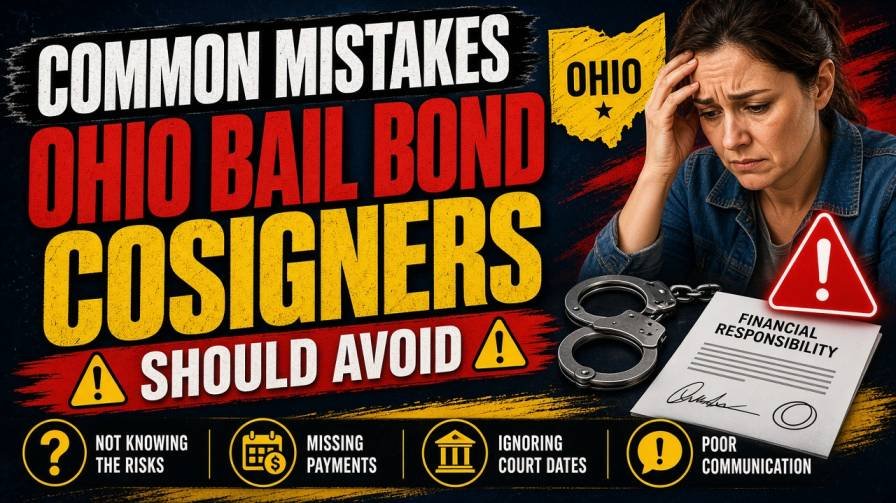
When a friend or family member is arrested in Ohio, helping them get released from jail can feel like the right thing to do. However, agreeing to cosign a bail bond is a serious financial and legal decision. Before signing any documents, it is important to understand your responsibilities, the defendant’s court obligations, and the potential consequences of a missed court appearance.
A bail bond cosigner, sometimes called an indemnitor, may accept contractual financial responsibilities in connection with a bail bond. Depending on the agreement, these responsibilities may include helping ensure the defendant attends court, paying certain expenses, or accepting liability if the bond obligations are not fulfilled.
Many cosigners make avoidable mistakes because they are worried about their loved one or feel pressured to act quickly. Understanding the process can help you make an informed decision and reduce unnecessary financial risks.
This guide explains the common mistakes Ohio bail bond cosigners should avoid, practical steps to protect themselves, and what to consider before working with a bail bond company.
1. Signing a Bail Bond Agreement Without Reading It
One of the most common mistakes is signing paperwork without fully understanding what it means.
When someone is arrested, family members may feel pressure to arrange a release as quickly as possible. In this situation, it can be tempting to sign documents without reviewing the details. However, a bail bond agreement may contain important terms concerning financial responsibility, collateral, fees, and the consequences of failing to meet contractual obligations.
Before signing, ask the bail bond agent to explain:
- What financial responsibilities you are accepting.
- Whether you are responsible for expenses arising from a bond forfeiture.
- Whether collateral is required.
- What happens if the defendant misses a court appearance.
- What conditions must be satisfied before your obligations end.
- Whether additional documents create separate financial responsibilities.
Practical tip: Request copies of all documents you sign and keep them in a safe place. If a clause is unclear, ask for a written explanation before agreeing to it.
Do not assume that a verbal explanation automatically replaces the written contract. Review the actual terms and seek independent legal advice if necessary.
2. Assuming Cosigning Is Only a Favor
Helping someone obtain release from jail may seem like a simple act of kindness. However, cosigning a bail bond can involve more than providing personal information or helping with an upfront payment.
Depending on the agreement, a cosigner may undertake contractual obligations to the bail bond company. If the defendant fails to comply with the bond requirements, the financial consequences can extend beyond the initial payment.
For example, suppose you agree to cosign a bond for a relative. You believe your only responsibility is paying the agreed premium. However, the contract also contains an indemnity agreement that addresses specified losses or expenses.
If a covered loss occurs, the company may seek payment under that agreement, subject to the contract and applicable law.
This does not mean every cosigner automatically owes the full face value of a bond. The amount and nature of potential liability depend on the documents signed, the circumstances, and applicable law.
How to avoid this mistake: Treat cosigning as a significant financial commitment rather than an informal favor. Consider whether you could manage the potential financial consequences before signing.
3. Failing to Confirm the Defendant’s Court Dates
Missing a required court appearance can have serious consequences for the defendant and may create financial problems for a cosigner.
Under Ohio Revised Code Chapter 2937, a defendant’s failure to appear as required can result in bail forfeiture. The court may also take additional action depending on the circumstances and applicable release conditions.
Cosigners should not assume that the defendant will remember every court date or receive every reminder.
Before the defendant is released, ask how to confirm the next court appearance. Record the court’s name, case number, hearing date, time, and location.
Useful precautions include:
- Saving court dates in a digital calendar.
- Setting reminders several days before each hearing.
- Confirming changes directly with the court or through an authorized case-information service.
- Encouraging the defendant to communicate with their attorney.
- Checking whether the court has issued additional instructions.
Remember that a reminder from a family member is not a substitute for official court information.
Practical tip: Encourage the defendant to verify each hearing directly with the appropriate court and their attorney, particularly when a hearing has been rescheduled.
4. Ignoring the Defendant’s Release Conditions
Getting released from jail does not mean a defendant can disregard the court’s instructions.
Depending on the case, release conditions may include restrictions on travel, requirements to maintain contact with pretrial services, prohibitions on contacting certain individuals, or other court-ordered obligations.
Violating a release condition can result in further court action and may affect the defendant’s release status or bail.
Cosigners should understand the general conditions that the defendant must follow, particularly if the cosigner has agreed to help the defendant comply with them.
However, cosigners should not assume that they have the authority to change court conditions or grant permission to ignore them.
How to avoid this mistake:
- Ask the defendant to explain the conditions imposed by the court.
- Encourage the defendant to obtain clarification from their attorney.
- Do not help the defendant violate a protective order or other court restriction.
- Contact the appropriate legal professional if you are concerned about compliance.
A cosigner can offer practical support, but the defendant remains responsible for following the court’s orders.
5. Agreeing to Provide Collateral Without Understanding the Risks
Some bail bond arrangements involve collateral or other forms of financial security. Depending on the agreement, collateral may include cash, certain property interests, or other legally acceptable security.
Providing collateral can put personal assets at risk if the obligations covered by the agreement are not fulfilled.
For example, a cosigner might provide cash or agree to secure an obligation with property. If a covered loss occurs, the consequences may depend on the contract, applicable law, and the steps taken by the parties.
Ohio law establishes requirements for collateral accepted by surety bail bond agents. Ohio Revised Code Section 3905.92 addresses matters such as the reasonableness of collateral, written receipts, handling of collateral, and certain notice and return requirements.
Before providing collateral, ask:
- What exact asset or amount is being pledged?
- Which agreement governs the collateral?
- Under what circumstances may the collateral be used?
- What happens if the bond is forfeited?
- What conditions must be met before the collateral is returned?
- What documentation will you receive?
Important: Never assume that collateral will be returned immediately after the defendant leaves jail or attends one court hearing. Confirm the bond’s status and the applicable release and return procedures.
Keep copies of receipts, agreements, and records identifying the property or funds provided.
