
If you or someone you care about is dealing with a criminal case, traffic charge, or other legal issue in Ohio, the court system can feel confusing fast. Many people do not know where a case starts, which court handles what, or what happens after an arrest. Learning the basics can make the process less stressful and help you make better decisions.
Ohio has a layered court system. Each court has a specific role, and understanding those roles can help you follow a case from beginning to end. Whether you are trying to understand a misdemeanor charge, a felony case, a bond hearing, or an appeal, this guide explains how the Ohio court system works in simple terms.
Why understanding the court system matters
A court case can move quickly. Deadlines, hearings, bond conditions, and paperwork can all affect the outcome. When people do not understand the process, they may miss a hearing, fail to meet a requirement, or feel lost at an important stage.
Knowing the court structure helps you:
-
Understand where a case is being heard.
-
Know what type of judge may handle the matter.
-
Prepare for hearings and deadlines.
-
Follow the progress of a criminal or civil case.
-
Make more informed choices for yourself or a loved one.
For families dealing with an arrest, this knowledge is especially important during the first few days after booking, bond setting, and release.
The basic structure of Ohio courts
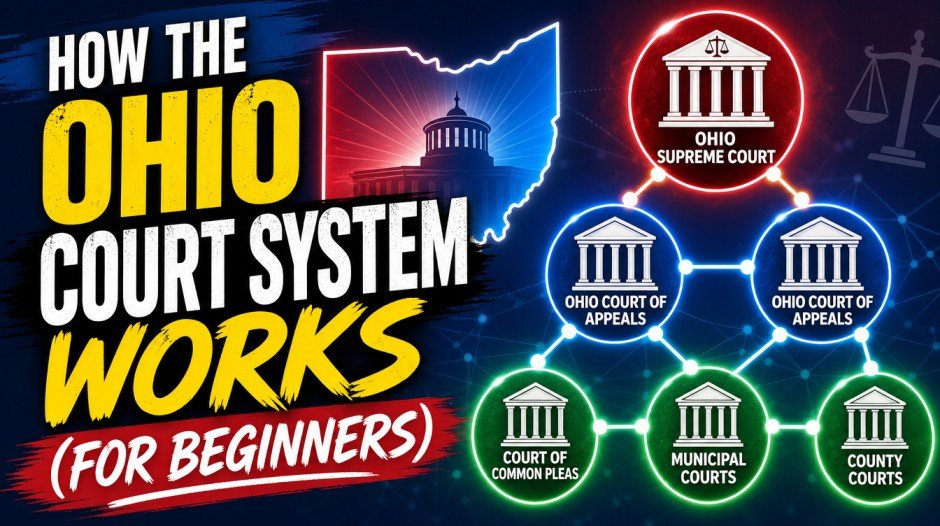
Ohio’s court system has several levels. Some courts handle local matters, while others review serious criminal cases, major civil disputes, and appeals.
The main levels include:
-
Mayor’s Courts.
-
Municipal and County Courts.
-
Courts of Common Pleas.
-
District Courts of Appeals.
-
The Supreme Court of Ohio.
Each court serves a different purpose. A case may begin in one court and later move to another depending on the type of issue involved.
Mayor’s Courts
Some Ohio cities and villages operate Mayor’s Courts. These courts usually handle minor traffic violations and local ordinance violations. They do not handle serious criminal cases.
Mayor’s Courts are not courts of record in the same way as other Ohio courts. In many situations, if a matter becomes more serious or is challenged, it may move to a Municipal Court or County Court.
For beginners, the key thing to know is this: if the issue is minor and local, it may start in a Mayor’s Court. If it involves more serious legal consequences, another court is usually involved.
Municipal Courts and County Courts
Municipal Courts and County Courts are often where many people first encounter the Ohio court system. These courts commonly handle:
-
Misdemeanor criminal cases.
-
Traffic offenses.
-
Preliminary hearings in felony cases.
-
Smaller civil disputes.
-
Evictions and certain local matters.
If someone is arrested on a misdemeanor, the first court appearance may happen in a Municipal or County Court. In felony cases, these courts may handle the early stage of the case, including arraignment and bond, before the matter is sent to the Court of Common Pleas.
These courts play a major role in the day-to-day operation of local justice. For many Ohio residents, this is the most familiar part of the system.
Courts of Common Pleas
The Court of Common Pleas is the main trial court for more serious matters in Ohio. Every county has a Court of Common Pleas, and these courts are divided into specialized sections called divisions.
Common divisions include:
-
General Division.
-
Domestic Relations Division.
-
Juvenile Division.
-
Probate Division.
The General Division handles serious criminal cases, including felonies, and larger civil disputes. If a felony charge begins in a lower court, it is generally transferred here after the early hearings.
The Domestic Relations Division handles divorce, child support, and related family law matters.
The Juvenile Division handles cases involving minors, including delinquency, abuse, neglect, and dependency matters.
The Probate Division handles wills, estates, guardianships, adoptions, and certain mental health matters.
When people hear that a case is going to “Common Pleas,” it usually means the issue is more serious or falls into a specialized legal area.
What happens after an arrest in Ohio
For many families, the biggest questions begin right after an arrest. While every case is different, the process often follows a general path.
A typical criminal case may involve:
-
Arrest and booking.
-
A bond decision or bond hearing.
-
Arraignment, where charges are formally presented.
-
Pretrial hearings.
-
Possible plea negotiations.
-
Trial, if the case is not resolved earlier.
-
Sentencing, if there is a conviction or plea.
During booking, law enforcement records the arrest and processes the person into custody. Soon after, the court addresses release conditions. That may include a recognizance release, cash bond, surety bond, or other conditions.
This stage matters because a person’s ability to return home, work, and prepare for court may depend on the bond decision.
Understanding bond and release
Bond is meant to help ensure that a defendant returns to court. The judge may consider several factors when setting bond, such as:
-
The seriousness of the charge.
-
Prior criminal history.
-
Ties to the community.
-
Risk of failing to appear.
-
Public safety concerns.
Depending on the case, the court may order release without money, set a cash amount, or allow a surety bond. Conditions may also be added, such as no-contact orders, travel restrictions, or drug testing.
Families are often overwhelmed at this stage because they need answers quickly. Understanding what court is involved and what release options may be available can reduce confusion during a stressful time.
If you need help understanding the bond process in Ohio, Allstate Bail Bonds can assist. Our team works with families who need clear information and fast support during a difficult situation. You can reach Allstate Bail Bonds at 419-765-0861.
Arraignment: the first formal court appearance
An arraignment is usually the first formal hearing after charges are filed. At this hearing, the court informs the defendant of the charges and explains basic rights. A plea may also be entered.
This hearing is important because it sets the tone for the case. The judge may review bond, issue conditions of release, and schedule future hearings.
For beginners, the arraignment is not usually the full trial. It is the starting point of the court process, not the final decision.
Preliminary hearings and grand juries
In felony matters, there are additional steps before trial in the Court of Common Pleas.
A preliminary hearing may happen in a lower court to determine whether there is enough evidence to continue the case. In many felony cases, the prosecutor may also present the matter to a grand jury.
A grand jury reviews the evidence and decides whether formal felony charges should proceed. If the grand jury returns an indictment, the case moves forward in the Court of Common Pleas.
This stage can feel technical, but the basic idea is simple: serious criminal charges usually go through an extra review process before reaching the main trial court.
Pretrial hearings and case preparation
Many cases are resolved before trial. Pretrial hearings allow the court, prosecutor, and defense attorney to discuss the status of the case, exchange evidence, address motions, and explore possible resolutions.
At this stage, several things may happen:
-
Evidence is reviewed.
-
Legal motions are filed.
-
Witnesses are identified.
-
Plea offers may be discussed.
-
Trial dates may be scheduled.
These hearings can happen more than once. Even if a person is out on bond, attending every required hearing is critical. Missing court can lead to a warrant, additional penalties, and bond problems.
Trial in Ohio courts
If a case is not dismissed or resolved through a plea, it may go to trial. Depending on the case, the trial may be decided by a judge or a jury.
At trial:
-
The prosecution presents evidence first.
-
Witnesses may testify.
-
The defense can challenge the evidence and present its own case.
-
The judge or jury decides whether the charges were proven.
In criminal cases, the prosecution must prove guilt beyond a reasonable doubt. That is a high legal standard, and it is one of the most important protections in the justice system.
Trials can take a single day or much longer depending on the complexity of the case.
Sentencing and what happens next
If a person is convicted or pleads guilty, the court moves to sentencing. The sentence depends on the charge, the facts of the case, criminal history, and Ohio law.
Possible outcomes may include:
-
Fines.
-
Probation or community control.
-
Jail or prison time.
-
Treatment or counseling requirements.
-
Restitution.
-
Other court-ordered conditions.
The sentencing hearing is where the court announces the penalties and requirements the defendant must follow. In some cases, the defense may ask for alternatives to incarceration or reduced penalties based on the circumstances.
Appeals in Ohio
Not every case ends in the trial court. A party may ask a higher court to review a legal error through an appeal.
Ohio’s District Courts of Appeals review decisions from lower courts. They do not usually hold a new trial or hear the case from scratch. Instead, they review the record to determine whether the law was applied correctly.
If an issue raises important legal questions, it may eventually be reviewed by the Supreme Court of Ohio. The Supreme Court is the highest court in the state and focuses on major legal issues and statewide importance.
For beginners, the main point is that an appeal is not a do-over. It is a legal review of whether the court made an error that affected the outcome.
Civil, family, probate, and juvenile matters
Not every Ohio court case is criminal. The court system also handles many non-criminal legal issues that affect everyday life.
Examples include:
-
Divorce and child custody.
-
Estate administration after death.
-
Guardianships for minors or adults.
-
Adoption proceedings.
-
Juvenile matters involving children.
-
Contract disputes and personal injury claims.
The court that hears the matter depends on the issue. Family law cases may go to Domestic Relations Court, while estate issues often go to Probate Court. Cases involving minors may be heard in Juvenile Court.
This is another reason the court system can seem confusing at first. Different courts handle different life events, and the names do not always make the process obvious.
Tips for navigating the Ohio court system
If you are trying to follow a case or help a loved one, a few practical steps can make the process easier:
-
Keep the case number written down.
-
Confirm the exact court handling the matter.
-
Check hearing dates carefully.
-
Arrive early for court appearances.
-
Follow all bond conditions.
-
Save copies of paperwork.
-
Stay in contact with your attorney.
-
Ask questions if you do not understand the next step.
Small mistakes can create bigger problems. Missing court, misunderstanding a bond requirement, or ignoring paperwork can lead to delays and added stress.
When families need fast help
One of the hardest parts of the legal process is the uncertainty right after an arrest. Families often need to know where their loved one is, what court will hear the case, and what options are available for release.
That is where experienced support can make a difference. Allstate Bail Bonds helps families understand the process and act quickly when time matters most. If you have questions about bail bonds in Ohio or need immediate assistance, contact Allstate Bail Bonds at 419-765-0861.
