
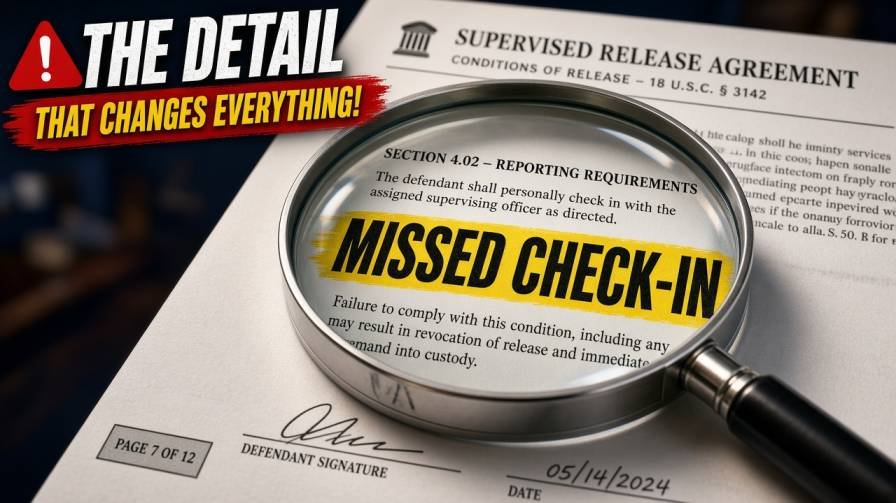
Being released on bail does not mean a person is free from all court obligations. In many cases, release comes with specific conditions that must be followed while the criminal case is pending. Depending on the court order, those conditions may include reporting to a pretrial services officer, checking in by phone or in person, attending scheduled court hearings, following travel restrictions, avoiding certain people, submitting to drug or alcohol testing, or complying with electronic monitoring.
Missing a required check-in can therefore become a serious matter. The exact consequences depend on the court’s order, the reason for the missed check-in, the person’s history of compliance, and whether the missed check-in is treated as a violation of release conditions.
For people facing this situation in Ohio, understanding what may happen next—and responding quickly—can make an important difference.
What Is a Bail Check-In?
A bail check-in is a required contact between a person released from custody and the agency, officer, or program supervising their pretrial release.
The check-in might be:
- An in-person appointment with pretrial services
- A telephone or online check-in
- A scheduled meeting with a supervising officer
- A required reporting appointment
- A drug or alcohol testing appointment
- A check-in connected to electronic monitoring or another supervision program
Not everyone released on bail has the same conditions. Ohio law allows courts to establish conditions designed to reasonably assure a defendant’s appearance in court, protect the community, and prevent obstruction of the criminal justice process. Conditions can include supervision, travel restrictions, electronic monitoring, house arrest, contact restrictions, treatment requirements, and other appropriate conditions.
The most important document to review is the person’s actual bail or release order. That order should identify the conditions that apply to the individual case.
Is Missing a Check-In the Same as Missing Court?
No. They are different situations, although both can create serious problems.
A failure to appear generally means a person does not appear at a required court proceeding. A missed check-in generally means the person fails to comply with a condition of pretrial release.
Ohio law specifically provides that a person who fails to appear as required may face legal consequences, and bail may be forfeited. Ohio law also states that when a condition of release is breached, the court may amend the bail.
A missed supervision appointment does not automatically mean the person will receive the same consequences as someone who completely fails to appear for court. However, it should never be ignored.
What Can Happen After a Missed Bail Check-In?
The consequences can vary significantly from one case to another. Possible outcomes include additional supervision, a warning, a court hearing, modification of release conditions, or more serious action by the court.
1. The supervising agency may contact the defendant
If someone misses a scheduled check-in, the supervising officer or pretrial services program may attempt to determine why the person did not report.
There may be a legitimate explanation. For example, a person could have experienced a medical emergency, transportation problem, unexpected work obligation, communication issue, or another circumstance that prevented the scheduled check-in.
The appropriate response is to address the missed appointment promptly rather than assuming the issue will disappear.
2. The missed check-in may be documented as a violation
A supervision program may document a missed appointment in the person’s record.
One isolated mistake may be treated differently from repeated violations. Courts can consider a person’s history of appearing at court proceedings and compliance with release conditions when evaluating bail and pretrial release.
This is one reason it is important to take every condition of release seriously.
3. The court could modify the conditions of release
Ohio law permits a judicial officer to modify conditions of pretrial release when circumstances justify doing so. The court may impose additional or different conditions, or modify existing conditions.
For example, depending on the circumstances, the court could potentially require stricter reporting, additional supervision, electronic monitoring, or another condition authorized by law.
The exact response depends on the case and the court’s determination.
4. Bail could be affected
A breach of a release condition can have consequences for the defendant’s bail.
Ohio Revised Code Section 2937.011 states that if a person fails to appear as required, bail may be forfeited, and if there is a breach of a condition of release, the court may amend the bail.
That does not mean every missed check-in automatically results in forfeiture or immediate incarceration. The circumstances matter.
5. A warrant may become an issue in some situations
A failure to appear in court is particularly serious. Ohio law allows the court with jurisdiction to issue an arrest warrant when an accused person fails to appear as required after being released under applicable bail provisions.
A missed supervision appointment is not necessarily the same as a missed court appearance. However, if a violation escalates or the person fails to comply with subsequent instructions or court requirements, the situation can become more serious.
What If the Missed Check-In Was an Honest Mistake?
An honest mistake should still be addressed quickly.
People sometimes miss appointments because of circumstances they did not anticipate. A vehicle breakdown, hospitalization, family emergency, incorrect appointment information, work conflict, or communication problem may explain why someone failed to report.
The important point is to avoid assuming that an explanation will automatically excuse the violation.
A person should:
- Review the release order and supervision instructions.
- Determine exactly what appointment or requirement was missed.
- Contact the appropriate supervising office as soon as possible.
- Explain the situation truthfully.
- Follow instructions about rescheduling or reporting.
- Contact their attorney promptly.
- Keep records of communications, appointments, and supporting documentation.
If there is a genuine emergency, documentation may be useful. For example, medical records, repair records, employer documentation, or other relevant evidence may help explain what happened.
What Should You Do Immediately After Missing a Check-In?
The worst approach is usually to ignore the situation.
If someone realizes they missed a required check-in, they should determine who they are required to contact and follow the instructions provided by the court or supervising agency.
Step 1: Read the release paperwork
Do not rely solely on memory.
The release order may contain specific reporting requirements, deadlines, telephone numbers, locations, or instructions for missed appointments.
Step 2: Contact the appropriate supervision office
If the missed appointment relates to pretrial supervision, contact the supervising office or officer as soon as possible.
Do not wait several days simply hoping that nobody notices.
Step 3: Contact the attorney
A criminal defense attorney can evaluate the circumstances and explain what legal steps may be appropriate.
The attorney can also help determine whether a court hearing, motion, or other response is necessary.
Step 4: Document what happened
Write down:
- The scheduled date and time
- What requirement was missed
- Why it was missed
- When the supervising office was contacted
- Who was contacted
- What instructions were provided
- Any documentation supporting the explanation
Keeping accurate records can help avoid confusion later.
Step 5: Follow the corrected schedule
If the supervising agency provides a new reporting date or additional instructions, follow them carefully.
Repeated missed appointments can create a much more serious compliance history than an isolated incident that is promptly corrected.
Can a Bail Bond Company Help After a Missed Check-In?
A bail bond company can be an important source of information about the bond and the obligations connected with the bond. However, a bail bondsman does not replace the court, pretrial services, or a criminal defense attorney.
If the issue involves a possible violation of a court-ordered release condition, the person should take the legal issue seriously and seek appropriate legal guidance.
For someone who obtained a surety bond, contacting the bail bond company promptly can also help clarify what the company needs to know and whether there are bond-related concerns.
It is important to understand that the court controls the criminal case and release conditions. A bail bond company cannot guarantee that the court will overlook a missed check-in or prevent the court from taking action.
What Happens If Someone Repeatedly Misses Check-Ins?
Repeated noncompliance can be more concerning than a single missed appointment.
Ohio courts consider information relevant to appearance and release, including a person’s record of appearing at court proceedings and whether the person has previously failed to comply with release-related requirements.
If someone repeatedly misses check-ins, the court may determine that existing release conditions are no longer sufficient. Depending on the circumstances, the court may modify the conditions of release or take other action permitted by law.
The goal of pretrial release conditions is to help ensure court appearance, protect people and the community, and maintain the integrity of the criminal justice process.
What If Someone Misses a Court Date While Out on Bail?
Missing a court date is generally more serious than missing a routine supervision appointment.
Ohio law provides specific consequences for failure to appear. Under Ohio Revised Code Section 2937.43, a court may issue an arrest warrant when an accused person fails to appear as required after being released under the applicable provisions.
Ohio also has a failure-to-appear statute that can impose criminal penalties in certain circumstances. For example, failure to appear connected with a felony charge can constitute a fourth-degree felony under Ohio Revised Code Section 2937.99, while certain misdemeanor-related failures to appear can constitute a first-degree misdemeanor. The statute contains exceptions and specific requirements, so the circumstances of the individual case matter.
Anyone who realizes they have missed a court appearance should contact their attorney and obtain case-specific legal guidance immediately.
Does Missing One Check-In Automatically Mean the Person Will Go Back to Jail?
Not necessarily.
There is no universal rule that every missed check-in automatically results in arrest or detention. Courts evaluate the circumstances and the applicable release conditions.
Factors that may matter include:
- Whether the person missed one appointment or several
- Whether the missed appointment was intentional
- Whether the person promptly corrected the problem
- Whether the person has otherwise complied with release conditions
- Whether there are previous failures to appear
- The seriousness of the underlying charge
- Whether the person poses a risk of nonappearance or danger
- The specific terms of the release order
Ohio law requires courts to consider relevant information when determining bail and release conditions, including the nature of the offense, evidence, criminal history, previous appearance record, and other circumstances.
How Can Someone Avoid Problems With Bail Check-Ins?
The safest approach is to treat every condition of release as a legal obligation.
Practical steps include:
- Keep a written calendar of all court and supervision dates.
- Set multiple reminders before each appointment.
- Confirm appointment details when necessary.
- Keep contact information for the supervising office readily available.
- Allow extra travel time for in-person appointments.
- Ask questions if a requirement is unclear.
- Notify the appropriate office as soon as possible if an emergency prevents attendance.
- Keep copies of important release paperwork.
- Stay in contact with the defense attorney.
- Never assume that a missed appointment is unimportant.
Being organized can prevent a simple scheduling mistake from developing into a larger legal problem.
Frequently Asked Questions
What is the first thing to do after missing a bail check-in?
Review the release paperwork and promptly contact the appropriate supervising office. It is also important to contact the person’s attorney for case-specific legal advice.
Can a missed check-in cause bail to be revoked?
It can potentially lead to changes in release conditions or other court action, depending on the circumstances and the terms of the release order. Ohio law allows courts to modify bail when a condition of release is breached.
Is missing a check-in the same as failing to appear in court?
No. A supervision check-in and a court appearance are separate obligations. The consequences depend on what requirement was missed and what the court ordered.
Can someone explain why they missed a check-in?
Yes. If there was a legitimate reason, the person should communicate the explanation promptly and provide supporting documentation when appropriate. However, an explanation does not guarantee that the court or supervising agency will excuse the violation.
Should someone contact a lawyer after missing a check-in?
Yes, particularly if the person has been told that the violation may be reported to the court, a warrant may exist, or their release conditions could change. A defense attorney can provide advice based on the specific case.
Final Thoughts
Missing a check-in while out on bail should never be ignored. Although one missed appointment does not automatically result in arrest or detention in every case, it can become a problem if the person fails to address it or continues violating release conditions.
