
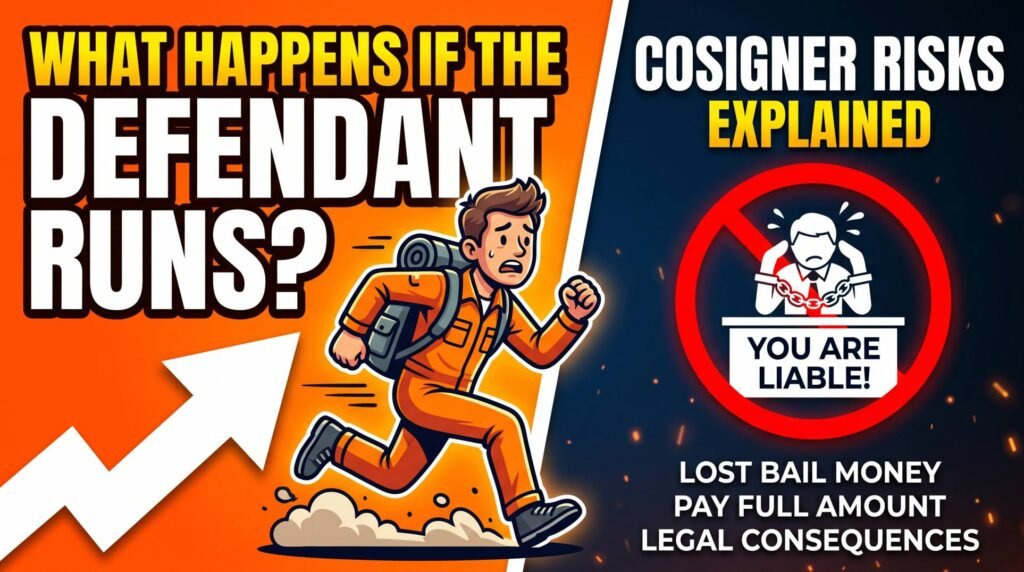
When someone agrees to cosign a bail bond, they are often focused on helping a friend or family member get out of jail quickly. In many cases, people sign the paperwork because they want to support a loved one through a difficult time. What many cosigners do not fully understand, however, is that this decision creates serious legal and financial responsibilities.
If the defendant fails to appear in court or disappears, the cosigner may be left facing major consequences. These can include financial loss, court-related stress, pressure from the bail bond company, and even liability tied to collateral used to secure the bond.
Understanding cosigner risks before signing is essential. If you are considering helping someone through the bail process, or if you have already signed and are worried about what could happen next, this guide explains what you need to know.
What a Cosigner Really Agrees To
A cosigner, sometimes called an indemnitor, is the person who takes responsibility for the defendant’s release through a bail bond. By signing the bond agreement, the cosigner promises that the defendant will appear in court as required and follow the terms of release.
This is not just a casual favor. It is a binding agreement. If the defendant misses court, runs, or violates bail conditions, the cosigner can be held responsible for the resulting costs and losses.
In practical terms, a cosigner may agree to:
-
Pay the bail bond premium.
-
Provide collateral such as a vehicle, jewelry, real estate interest, or other valuable property.
-
Help maintain contact with the defendant.
-
Notify the bail bond company if the defendant is likely to flee.
-
Accept financial responsibility if the bond is forfeited.
Many people assume they are only helping with paperwork or a payment. In reality, they are often taking on risk that can affect their finances, property, and peace of mind.
What It Means When a Defendant “Runs”
When people say a defendant “runs,” they usually mean the person has failed to appear in court and is actively avoiding law enforcement, the court, or the bail bond company. In some cases, the person leaves town. In others, they stop answering calls, change addresses, or hide from everyone involved in the case.
A missed court date does not always mean the defendant intended to flee. Sometimes there is confusion, a medical emergency, transportation trouble, or a paperwork issue. But once the defendant does not appear, the court may issue a bench warrant, and the bond can move toward forfeiture.
That is when the situation becomes very serious for everyone involved, especially the cosigner.
What Happens After the Defendant Misses Court
The exact process can vary depending on the court and the case, but the general pattern is often similar.
First, the defendant fails to appear at a required court hearing. The judge may then issue a bench warrant for the person’s arrest. The court can also notify the bail bond company that the bond is in danger of forfeiture or has already been forfeited, depending on the timeline and local rules.
Once the bail bond company learns that the defendant missed court, it will usually begin immediate efforts to locate the person. This may include:
-
Calling the defendant.
-
Contacting the cosigner.
-
Reaching out to references listed on the bond application.
-
Checking addresses, employment details, and known locations.
-
Taking action to surrender the defendant if needed.
At this stage, the cosigner is often the first person the bond company contacts because the cosigner is contractually responsible for helping ensure the defendant appears in court.
Can the Cosigner Lose Money?
Yes. This is one of the biggest risks.
The premium paid for the bond is usually non-refundable. That means the money paid to secure the bond is generally not returned, even if the case ends successfully. If the defendant runs, the cosigner may face additional losses beyond that original payment.
Possible financial consequences can include:
-
Liability for the full bond amount if recovery efforts fail and the bond is forfeited.
-
Costs related to locating and returning the defendant.
-
Administrative or legal expenses allowed under the bond agreement.
-
Loss of collateral used to secure the bond.
For example, if a cosigner signs for a large bond and uses property as collateral, that property may be at risk if the defendant disappears and the bond company suffers a loss.
This is why cosigning should never be treated as a quick favor or emotional decision. It should be treated like a serious financial commitment.
What Happens to Collateral?
Collateral is property or value pledged to help secure the bond. Not every bond requires it, but when collateral is involved, the stakes are much higher.
If the defendant appears in court as required and the bond obligations are satisfied, the collateral is usually returned according to the bond agreement. But if the defendant runs and the bond is forfeited, the collateral may be used to cover the loss.
Collateral can include:
-
Cars or trucks.
-
Jewelry or valuables.
-
Bank assets.
-
Real estate or property interests.
-
Other items of significant value.
Before signing, a cosigner should ask exactly what property is being pledged, how it is valued, when it can be seized, and what steps are required for its return.
A trustworthy bail bond company should explain this clearly and answer every question before documents are signed.
Is the Cosigner Responsible for Finding the Defendant?
In many situations, the cosigner is not personally expected to physically search for the defendant, but they are expected to help. This means they may need to provide information, answer calls, share updates, and cooperate fully if the defendant has gone missing.
Because the cosigner often knows the defendant better than anyone else involved in the bond, they may be in the best position to notice warning signs early.
Examples of red flags include:
-
The defendant talking about leaving town.
-
Missed check-ins.
-
Loss of contact.
-
Sudden job resignation.
-
Unusual social media behavior.
-
Avoiding reminders about court.
If a cosigner notices these signs and stays silent, the situation can become much worse. Early communication with the bail bond company may help prevent a full bond forfeiture or allow faster action before the defendant disappears completely.
Can a Cosigner Remove Themselves From the Bond?
Sometimes, yes — but timing matters.
If a cosigner begins to believe the defendant may run, it may be possible to ask the bail bond company about revoking the bond or surrendering the defendant before a missed court date occurs. This process depends on state law, the bond agreement, and the facts of the case.
A cosigner cannot simply decide they are no longer responsible and walk away. The bond remains active until the legal obligations are resolved or the bond company takes formal action.
That is why it is important to speak up immediately if something feels wrong. Waiting too long can eliminate options and increase the chance of financial loss.
Common Misunderstandings About Cosigning
Many cosigners get into trouble because they rely on assumptions instead of facts. A few common misunderstandings include the following.
-
“I’m only helping them get out of jail, not taking on legal responsibility.” In reality, cosigning creates a real contractual obligation.
-
“If they miss court once, it’s not a big deal.” A missed court date can trigger a warrant, forfeiture process, and urgent recovery efforts.
-
“I’ll get my money back later.” The bond premium is typically not refundable.
-
“If they run, only the defendant gets in trouble.” The defendant faces criminal consequences, but the cosigner may face financial consequences.
-
“Collateral is just a formality.” Collateral can be seized or used to satisfy losses if the bond is not resolved properly.
The more a cosigner understands up front, the better their chances of avoiding serious problems later.
How to Protect Yourself Before Cosigning
If you are thinking about cosigning a bail bond, take time to slow down and ask direct questions. Do not sign anything you do not fully understand.
Here are smart steps to take before agreeing:
-
Ask for a full explanation of your responsibilities.
-
Read the bond agreement carefully.
-
Understand whether collateral is required and what could happen to it.
-
Make sure you know every court date and release condition.
-
Be honest about whether the defendant is trustworthy and likely to appear.
-
Consider the defendant’s history, including prior missed court dates, substance abuse issues, travel plans, or unstable housing.
-
Keep copies of all signed documents.
-
Ask what to do if you believe the defendant may flee.
This decision should be based on facts, not pressure, guilt, or panic.
How a Reliable Bail Bond Company Helps
A professional bail bond company should do more than process paperwork. It should explain the bond clearly, answer questions honestly, and help cosigners understand exactly what is at stake.
Good guidance matters because many families are dealing with stress, confusion, and urgency when seeking release from jail. Clear communication can reduce mistakes and help everyone understand their responsibilities from the beginning.
A reliable company will typically:
-
Explain the bond process in plain language.
-
Review payment terms and collateral requirements clearly.
-
Discuss what happens if the defendant misses court.
-
Provide contact information and support.
-
Encourage immediate communication if problems arise.
Working with an experienced team can make the process more manageable and reduce misunderstandings that often lead to bigger problems.
When to Get Help Right Away
If you are already a cosigner and believe the defendant may run, do not wait for a missed court date. Contact the bail bond company immediately. Acting early can protect your interests and may improve the chances of resolving the situation before it becomes far more expensive and stressful.
You should seek help right away if:
-
The defendant is avoiding calls or messages.
-
They have mentioned leaving the area.
-
You learn they plan to miss court.
-
They have stopped living at their known address.
-
You believe they are hiding.
-
You no longer feel confident that they will comply with release terms.
Fast action can make a major difference.
Final Thoughts on Cosigner Responsibility
Cosigning a bail bond can be an act of support, but it also creates serious responsibility. If the defendant runs, the cosigner may face financial exposure, collateral loss, and intense pressure to help resolve the situation. That is why every cosigner should understand the agreement fully before signing and stay alert throughout the case.
If you need clear answers about bail bonds, defendant obligations, or cosigner responsibility, Allstate Bail Bonds is here to help. Our team works with families who need reliable information and straightforward guidance during difficult moments. To speak with Allstate Bail Bonds, call 419-765-0861.
