
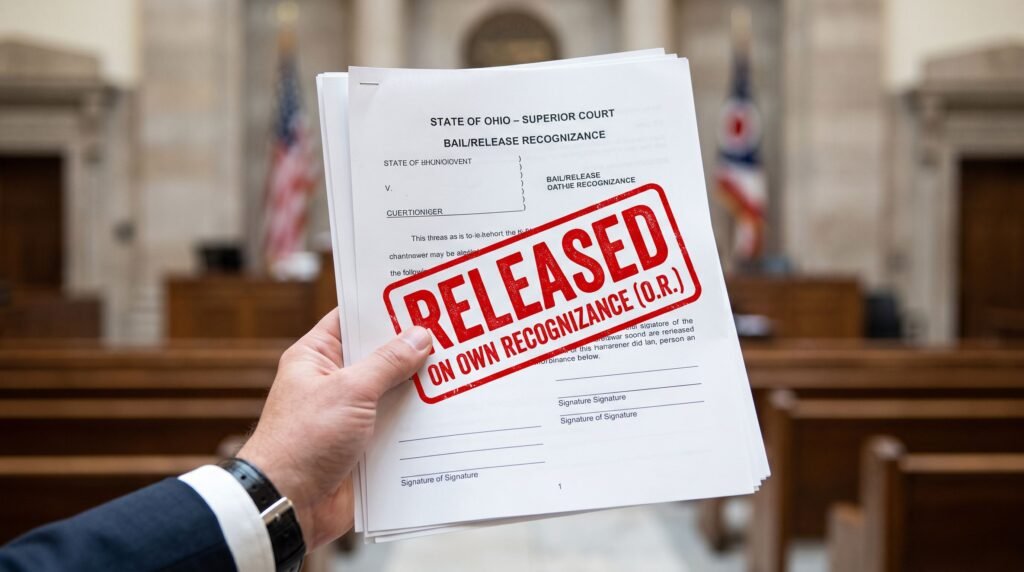
Being arrested or having a loved one taken into custody can be stressful and confusing. One of the first questions people ask is, “Will they be released from jail today?” In Ohio, the answer depends on several factors, including the type of charges, criminal history, and the judge’s decision.
One option that some defendants may qualify for is an Own Recognizance Release, often called an OR Release. Understanding how this process works can help families make informed decisions during a difficult time.
This guide explains what an Own Recognizance Release is, how it works in Ohio, who may qualify, and what happens if the court denies the request.
What Is an Own Recognizance Release?
An Own Recognizance Release (OR Release) is a court order allowing a defendant to leave jail without paying bail. Instead of posting cash or using a bail bond, the defendant signs a written promise stating they will:
- Appear at all scheduled court hearings
- Follow every condition ordered by the court
- Obey all applicable laws while the case is pending
The court relies on the person’s promise and determines that they are likely to return to court without requiring financial security.
An OR Release is designed for individuals who are considered a low flight risk and who are not believed to pose a danger to the community.
How Does an OR Release Work in Ohio?
After an arrest, the defendant is typically taken to jail for booking. Depending on the circumstances, the court schedules an initial appearance where a judge reviews the case.
During this hearing, the judge evaluates several factors before deciding whether to:
- Release the defendant on their own recognizance
- Set a cash bail amount
- Require a surety bond
- Impose additional release conditions
- Keep the defendant in custody
If the judge grants an OR Release, the defendant signs paperwork agreeing to follow all court requirements before leaving custody.
Who Qualifies for an Own Recognizance Release?
There is no automatic right to an OR Release. Every case is evaluated individually.
Common factors courts may consider include:
Nature of the Charges
People charged with non-violent misdemeanors or lower-level offenses are generally more likely to be considered than those facing serious felony charges.
Criminal History
A limited or clean criminal record can support an OR Release request.
Court Appearance History
Judges often consider whether the defendant has previously appeared in court as required or has a history of missed court dates.
Community Ties
Strong ties to the local community may demonstrate stability, including:
- Steady employment
- Long-term residence
- Family living nearby
- School enrollment
- Military service
- Community involvement
Risk to Public Safety
If the court believes releasing the defendant could create a safety concern, an OR Release may be denied.
Conditions That May Be Included With an OR Release
Receiving an OR Release does not mean the case is over or that there are no restrictions.
The court may require the defendant to:
- Attend every scheduled court hearing
- Notify the court before changing addresses
- Avoid contact with certain individuals
- Stay away from specific locations
- Maintain employment or schooling
- Refrain from alcohol or drug use
- Participate in counseling or treatment programs
- Follow electronic monitoring requirements if ordered
Violating these conditions can result in arrest and additional legal consequences.
What Happens If Someone Misses Court?
Failing to appear in court after receiving an OR Release is a serious matter.
Possible consequences include:
- A bench warrant for arrest
- Revocation of the OR Release
- New criminal charges in some situations
- Higher bail during future hearings
- Increased difficulty obtaining release later
Even missing one court date can significantly affect a pending criminal case.
If an emergency prevents attendance, the defendant should contact their attorney immediately.
OR Release vs Bail Bond
Many people confuse an Own Recognizance Release with a bail bond, but they are very different.
| Own Recognizance Release | Bail Bond |
|---|---|
| No bail payment required | Bail amount is set by the court |
| Based on a promise to appear | Financial guarantee secures release |
| Available only if approved by the judge | Used when bail has been established |
| May include release conditions | Also requires compliance with court orders |
If the judge does not approve an OR Release, a bail bond may become the quickest path to release from custody.
Why Would a Judge Deny an OR Release?
Several circumstances may lead a judge to deny the request.
Examples include:
- Serious felony allegations
- Violent offenses
- Repeat criminal history
- Prior failures to appear
- Outstanding warrants
- Risk of fleeing the jurisdiction
- Concerns about public safety
- Violations of previous release conditions
Each decision depends on the facts presented during the hearing.
Common Situations Where OR Release May Be Considered
While every case is different, OR Releases are more commonly considered in situations involving:
- Certain misdemeanor offenses
- First-time offenders
- Traffic-related criminal charges
- Non-violent offenses
- Individuals with strong community connections
- Defendants who voluntarily appeared after receiving a summons
Approval is never guaranteed, and the final decision always belongs to the court.
Benefits of an Own Recognizance Release
When granted, an OR Release offers several advantages.
No Upfront Bail Payment
The defendant does not need to pay cash bail or arrange a surety bond before leaving custody.
Faster Return to Daily Life
Release allows individuals to continue working, attending school, and supporting their families while their case moves through the court system.
Better Case Preparation
Defendants released from custody can work more closely with their attorney to prepare their defense.
Reduced Financial Burden
Families avoid the immediate expense associated with posting bail.
Responsibilities After Being Released
Receiving an OR Release comes with important obligations.
Defendants should:
- Keep copies of all court paperwork.
- Mark every court date on a calendar.
- Arrive early for hearings.
- Stay in communication with their attorney.
- Follow every court condition carefully.
- Update the court if contact information changes.
- Avoid any conduct that could lead to additional criminal charges.
Responsible compliance helps demonstrate respect for the court process.
Can Bail Be Reduced Instead of Receiving an OR Release?
Yes.
If the judge declines to grant an Own Recognizance Release, the defense may request:
- A lower bond amount
- Modified release conditions
- Alternative forms of release
- A reconsideration hearing if circumstances change
Every case is unique, and available options depend on the facts and applicable Ohio law.
Frequently Asked Questions
Does everyone qualify for an OR Release?
No. Judges evaluate each defendant individually based on the circumstances of the case and other relevant factors.
Is an OR Release available for felony charges?
Sometimes, but eligibility depends on the seriousness of the offense, criminal history, and the court’s assessment of risk.
Can an OR Release be revoked?
Yes. Violating court conditions or failing to appear can result in revocation and possible re-arrest.
Does an OR Release mean the charges are dismissed?
No. It only allows the defendant to remain out of custody while the criminal case continues.
Can a lawyer request an OR Release?
Yes. Defense attorneys frequently ask the court to consider release on recognizance when appropriate.
When a Bail Bond May Still Be Needed
Not every defendant qualifies for release without bail. If the judge sets a bond amount instead of granting an OR Release, obtaining assistance quickly can help reduce the time spent in custody.
Understanding your options after an arrest can make the process less overwhelming for both defendants and their families.
Contact Allstate Bail Bonds
If your loved one has been arrested in Ohio and the court has set bail instead of granting an Own Recognizance Release, experienced assistance can help you understand the next steps.
Allstate Bail Bonds provides prompt, professional bail bond services with a focus on clear communication and dependable support during a difficult time. Whether you have questions about the release process or need help securing a bond, the team is available to explain your options and assist you through every step.
Allstate Bail Bonds
Phone: 419-765-0861
Call today to speak with a knowledgeable bail bond professional and get the guidance you need when time matters.
